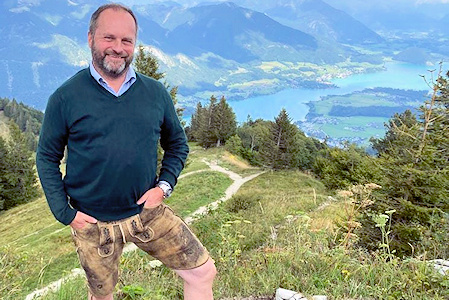
Christian Brunner is an Austrian-born folklorist, author, educator, and ritual leader whose work is rooted in the living traditions, seasonal customs, and mythic imagination of the European Alps. Raised among the mountains and valleys of Austria, he grew up in a culture where folklore was not merely a subject of study but an enduring presence woven into festivals, family traditions, local landscapes, and community life. This lifelong connection to Alpine culture informs his work as a writer, teacher, and guide into the rich world of European folk belief.
His research and teaching focus on the customs, rituals, and legendary beings of the dark half of the year, including Krampus and Perchten traditions, the Wild Hunt, winter processions, ritual masks, folk magic, and the relationship between human communities and the unseen forces embodied in folklore. Drawing on historical sources, ethnographic research, material culture, and personal experience, he seeks to illuminate the deeper meanings behind these traditions and the ways they continue to evolve in the modern world.
Christian is the author of Alpine Witchery and Krampus, Witches, and the Wild Hunt: Alpine Traditions for the Dark Half of the Year. Through his writing, he explores the landscapes where folklore, spirituality, and cultural memory intersect, bringing readers beyond popular stereotypes and into a deeper understanding of the traditions themselves. His work highlights not only the customs and stories of the Alps but also the values they express: resilience, community, reverence for the natural world, and an ongoing dialogue between the visible and invisible dimensions of life.
As a speaker and educator, Christian has presented internationally at conferences, festivals, and educational events, leading workshops on Alpine folklore, seasonal ritual, masks and masquerade, European witchcraft traditions, ancestor veneration, and the transformative role of darkness in myth and spirituality. His presentations combine scholarly insight with storytelling, inviting participants to engage not just intellectually but imaginatively and experientially with the traditions he shares.
A central theme of Christian's work is the idea that folklore is not a collection of relics from the past, but a living process through which communities make meaning. He is particularly fascinated by liminal spaces and threshold figures: masked beings who blur boundaries, winter spirits who challenge ordinary reality, and stories that invite encounters with mystery. In these traditions, monsters are not simply threats to be overcome. They are guides, initiators, and agents of transformation who lead us toward deeper knowledge of ourselves and the worlds we inhabit.
Whether writing, teaching, conducting rituals, or leading immersive workshops, Christian seeks to create opportunities for meaningful engagement with traditional culture and the mythic imagination. He invites audiences to step into the twilight realm between scholarship and story, history and mystery, where ancient bells still echo through snowy valleys, masked figures emerge from the darkness, and old traditions continue to speak in a modern world hungry for connection, enchantment, and belonging.